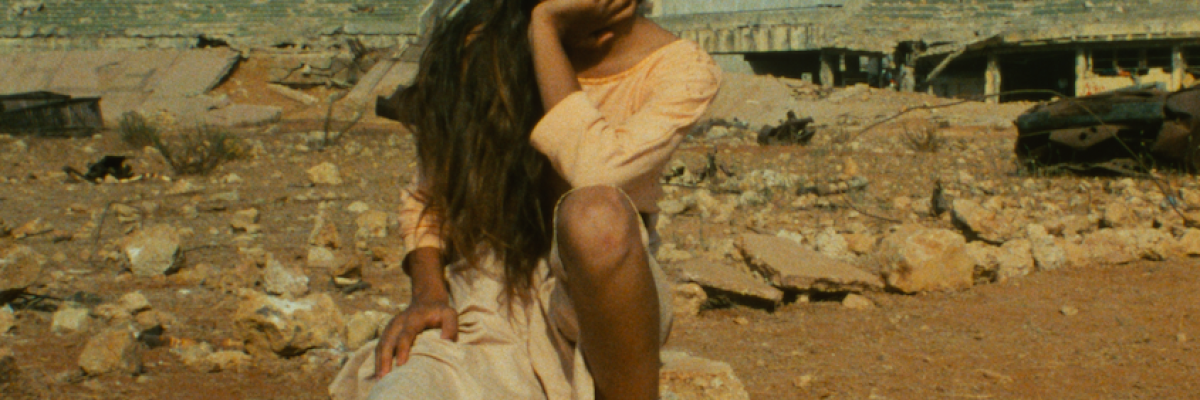
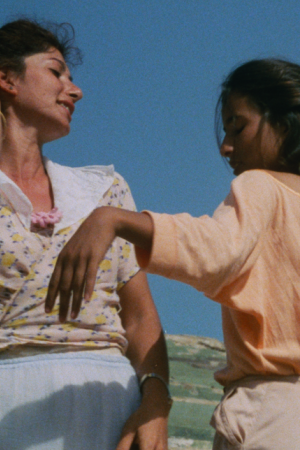
Jocelyne Saab became a journalist because she couldn’t go to film school and wanted to create images. It was when she started working for French television that she picked up a camera, after a brief stint at Télé-Liban, where she produced two reports that have now disappeared. In the early 1970s, her interest in fiction led her to write screenplays, and one story in particular kept her busy: that of Beirut, and of life despite the war. The script for Ghazl el-banat went through several versions and the filmmaker teamed up with a Canadian production company. Saab finally enlisted the services of French screenwriter Gérard Brach for the final version. Her first location scouting photos were taken in her house, the same one that appears burnt down in one of her most poignant documentaries, Beirut My City (1982). Having planned to shoot the film as early as 1978, learning alongside Farouk Beloufa on the set of Nahla (1979) and with Volker Schlöndorff on the set of The Circle of Deceit (1981), Saab finally had to return to Beirut, having stopped documenting the war, to tell a story of platonic love between a young refugee from southern Lebanon and a bourgeois painter depressed by the political situation. The film traverses spaces that have now disappeared, takes us into some of Beirut’s most sumptuous palaces, and tells us about the war from the point of view of those who inhabit it. Saab convinced French actors Jacques Weber and Juliet Berto to take part in the adventure. The film was shown at the Cannes Directors’ Fortnight in 1985 under the title L’Adolescente, sucre d’amour (The Razor’s Edge). It was reedited for its brief theatrical release in 1988, under the title A Suspended Life: for lack of money, Saab made the cuts to the distribution copy. All the prints we’ve found are different from one another. At the end of her life, Jocelyne Saab mourned her original version, which she felt was more “naive but sincere”. This restoration was carried out in Beirut from the 35mm positive conservation print belonging to the Canadian production company that supported the film, held at the Cinémathèque québécoise and digitised by the Cinémathèque suisse. - Mathilde Rouxel
*Copy restored in 4K in 2025 by Association Jocelyne Saab in collaboration with Cinémathèque suisse and La Cinémathèque québécoise at Cinémathèque suisse and Association Jocelyne Saab laboratories, from the positive preservation copy of the original cut presented at Cannes in 1985. Funding provided by Association Jocelyne Saab and Nessim Ricardou-Saab.
Presented by Mathilde Rouxel
أصبحت جوسلين صعب صحفيةً لأنها لم تستطع الالتحاق بمدرسة السينما وكانت ترغب في العمل في مجال الصور والفيديو. وعندما بدأت العمل في التلفزيون الفرنسي، حملت الكاميرا للمرة الأولى، بعد تجربة قصيرة في تلفزيون لبنان، حيث أنجزت تقريرين فُقدا لاحقًا. في أوائل السبعينيات، راحت تكتب سيناريوهات خيالية، واكتشفت شغفها تجاه قصة بيروت وحياة المدينة رغم الحرب. مرّ سيناريو «غزل البنات» بعدة نسخ، وتعاونت المخرجة مع شركة إنتاج كندية. وفي النهاية، استعانت صعب بخدمات كاتب السيناريو الفرنسي جيرار براش لإعداد النسخة الأخيرة.
التُقطت أولى الصور التحضيرية في منزلها، وهو المنزل نفسه الذي يظهر محترقًا في أحد أكثر أفلامها الوثائقية إيلامًا، «بيروت مدينتي» (1982). وكانت قد خططت لتصوير الفيلم منذ عام 1978، وتعلّمت في تلك الفترة إلى جانب فاروق بلوفة في موقع تصوير «نهلة» (1979)، ومع "فولكر شلوندورف" في موقع تصوير «دائرة الخداع» (1981). غير أنها اضطرت في النهاية إلى العودة إلى بيروت، بعد أن توقفت عن توثيق الحرب، لتروي قصة حب أفلاطوني بين لاجئ شاب من جنوب لبنان ورسّام برجوازي يعاني من الاكتئاب بسبب الوضع السياسي.
يجوب الفيلم أماكن اختفت اليوم، ويأخذنا إلى بعض من أفخم قصور بيروت، ويروي لنا الحرب من وجهة نظر من عاشوها. وقد أقنعت صعب الممثلين الفرنسيين جاك فيبر وجولييت بيرتو بالمشاركة في هذه المغامرة. عُرض الفيلم في مهرجان "كان" عام 1985 تحت عنوان L'Adolescente, sucre d'amour (The Razor's Edge). ثم أُعيد مونتاجه لعرضه السينمائي القصير عام 1988 تحت عنوان Une vie suspendue. وبسبب نقص التمويل، قامت صعب بنفسها بإجراء الحذوفات على نسخة التوزيع. جميع النسخ التي عثرنا عليها تختلف الواحدة عن الأخرى.
في نهاية حياتها، استرجعت جوسلين ذاكرة نسختها الأصلية، التي شعرت بأنها كانت "أكثر سذاجة ولكن أكثر صدقًا أيضًا". تمت إعادة التركيب في بيروت انطلاقًا من نسخة حفظ إيجابية 35 ملم تعود لشركة الإنتاج الكندية التي دعمت الفيلم، والمحفوظة فيCinémathèque québécoise ، وقد عملتCinémathèque suisse على الرقمنة. - ماتيلد روكسيل
*أعادت جمعية جوسلين صعب ترميم النسخة بدقة 4K عام 2025، بالتعاون معCinémathèque suisse و Cinémathèque québécoise، في مختبراتCinémathèque suisse وجمعية جوسلين صعب، اعتمادًا على نسخة الحفظ الإيجابية للنسخة الأصلية التي عُرضت في "كان" عام 1985. تم توفير التمويل من قبل جمعية جوسلين صعب ونسيم ريكاردو صعب.
تقديم ماتيلد روكسل
About Jocelyne Saab
Jocelyne Saab (1948–2019) was a war reporter, documentary filmmaker, fiction filmmaker and experimental artist. After working as a correspondent for French television in Libya, Egypt, Syria and Iraq, she covered the Lebanese civil war, as well as the armed struggle in Western Sahara and the aftermath of the Iranian Revolution. She also worked for many years in Egypt, from where she was banned for seven years because of her political documentary work. Following her first two feature films shot in Lebanon, Ghazl Al-Banat (1985) and Once Upon a Time in Beirut (1994), she shot Dunia (2006) in Cairo. She subsequently turned to photography, installation art and video art, and is considered a major figure in Lebanese cinema.
جوسلين صعب (1948-2019) مراسلة حربية ومخرجة أفلام وثائقية ومخرجة أفلام روائية وفنانة تجريبية. عملت كمراسلة للتلفزيون الفرنسي في ليبيا ومصر وسوريا والعراق، وفي تغطية الحرب الأهلية اللبنانية، وكذلك النضال المسلح في الصحراء الغربية وأحداث ما بعد الثورة الإيرانية. كما عملت لسنوات طويلة في مصر، حتى تم منعها من دخول البلاد لمدة سبع سنوات بسبب عملها الوثائقي السياسي، وبعد أول فيلمين روائيين طويلين لها تم تصويرهما في لبنان، غزل البنات (1985) وكان في يوم من الأيام بيروت (1994)، عادت وصورت في القاهرة فيلم دنيا (2006). ثم اتجهت بعد ذلك إلى التصوير الفوتوغرافي وفن التركيب والفيديو، وتعتبر شخصية بارزة في السينما اللبنانية.